
Recently, Career Connectors hired my colleagues and me to deliver a five-city, statewide train-the-trainer program for the Arizona Department of Economic Security’s Division of Employment and Rehabilitation Services (DERS). My focus was interview preparedness: giving workforce professionals practical tools to help their clients communicate their value and avoid completely unraveling when someone says, “Tell me about yourself.” You know. The easy questions. Because what I learned about how to be confident in a job interview has less to do with personality and everything to do with preparation.
The experience was especially meaningful—and just a little surreal—because I began my own career at the Arizona Department of Economic Security. I once did the work I was now training other people to teach. Talk about a full-circle moment.
As we traveled across Arizona, one thing became increasingly clear to me: almost everyone experiences some version of a confidence crisis during an interview. It can happen to a CEO who has not interviewed in 20 years, a mechanic who knows the work so instinctively that explaining it feels unnatural, or someone returning after a career break who worries that time away erased everything that came before it.
Different careers. Different circumstances. Same fear: “What if they don’t see my value?”
Qualified People Don’t Always Sound Qualified
There is a persistent myth that highly qualified people naturally interview well. They do not. Some of the smartest and most accomplished people I know become completely different humans in interviews.
A confident executive who regularly makes million-dollar decisions can suddenly forget every accomplishment since middle school. A mechanic who can diagnose an engine problem by listening to it for 15 seconds may struggle to explain why he is good at his job. A person who held a family together through years of appointments, emergencies, paperwork, schedule changes, and insurance battles may say, “I wasn’t really doing anything. I was just caregiving.”
Just caregiving—as if managing people, schedules, crises, records, competing priorities, and professionals who never return phone calls doesn’t require any transferable skills.
The problem isn’t that these people have nothing to offer. The problem is that interviews require them to identify their value, organize it into a coherent answer, and deliver it while being evaluated by strangers. What could possibly be nerve-racking about that?
Interviews Measure More Than the Ability to Do the Job
Interviews are supposed to help employers determine who can do the job, but they also measure who can talk convincingly about doing the job. Those are not always the same thing.
The most capable candidate may not give the strongest interview. Sometimes, the strongest interview comes from the person who is simply better prepared to explain what they have done, how they did it, and why it mattered.
That distinction is especially important for people who have experienced unemployment, disability, career disruption, repeated rejection, or an extended absence from the workforce. Confidence gets bruised. After enough time away, people begin minimizing their experience. After enough rejection, they may start questioning abilities they once took for granted.
By the time they reach an interview, they aren’t simply answering questions. They may also be fighting the voice in their head telling them their experience is outdated, the employment gap is the only thing the interviewer will notice, and they are definitely rambling. Then someone asks them to describe their greatest strength. Perfect timing.
“Just Be Confident” Is Not Interview Advice
When someone is nervous about an interview, people love to say, “Just be confident.” Thank you, Karen. Very helpful.
Confidence is not a switch candidates can flip while sitting in the lobby. It is built before the interview by understanding what the employer needs, identifying experiences that demonstrate those abilities, and practicing how to discuss those experiences.
That does not mean memorizing a script. Please don’t memorize a script. A memorized answer may work beautifully until the interviewer changes three words in the question. Then the candidate spends the next 45 seconds mentally flipping through an invisible filing cabinet while maintaining an expression that says, “Everything is fine.”
Preparation is different. Prepared candidates know their own material. They have examined their experiences, identified their accomplishments, and practiced telling the stories that demonstrate what they can do. They don’t have to manufacture confidence because they have evidence. And possibly, just as important, it doesn’t matter if they are telling their stories to an AI interviewer or a panel of humans.
Build a Master Story Bank
The most useful thing a job seeker can do before an interview is create a Master Story Bank: a collection of five to eight experiences that demonstrate how they solve problems, work with others, navigate challenges, and create value.
The point is not to prepare a separate story for every possible interview question. That way lies madness. Instead, build a versatile group of stories that can be adapted to questions about leadership, teamwork, conflict, initiative, adaptability, customer service, failure, or problem-solving.
Your stories can come from full-time or part-time jobs, volunteer work, education, military service, contract assignments, community involvement, or caregiving. The experience does not have to come from a traditional workplace to demonstrate a valuable skill. It does, however, have to be true.
For each story, answer these six questions:
- What was the situation?
Provide enough context for the interviewer to understand your role and what was happening. - What was the crisis or challenge?
Define the real problem. “We were busy” is not a crisis. Were you short-staffed? Was a customer threatening to leave? Had production stopped? Was a deadline about to be missed? - What were the consequences?
Explain what was at stake if the problem wasn’t solved. Could the organization lose revenue, damage a client relationship, miss a deadline, compromise safety, delay service, or burn out an overwhelmed team? - What did you do?
Describe your individual decisions and actions. Use “I,” not only “we.” The employer is not interviewing your former department, committee, or shift. The employer is interviewing you. - What changed?
Identify the result. Include something concrete when possible: time saved, revenue protected, errors reduced, service restored, a deadline met, a customer retained, or a process improved. - What was the takeaway?
This is the special sauce. What did you learn? What did the organization learn? Did the experience lead to a better process, reveal a risk, improve communication, or change how similar situations were handled later?
The crisis and consequences are important because they give the story scale. Without them, a significant accomplishment can sound like a minor inconvenience involving an unusually dramatic spreadsheet.
The takeaway matters because it shows that you did more than survive the experience. You learned something from it—and perhaps helped the organization learn something, too.
What a Complete Interview Story Sounds Like
Consider this answer:
“We were short-staffed, so I took on more work and met our deadlines.”
It is not a bad answer, but it leaves the interviewer to do most of the detective work. We don’t know how serious the problem was, what the candidate actually did, or why the result mattered.
Now consider this version:
“When two team members left during our busiest quarter, several client deadlines were at risk. Missing them could have delayed customer launches and damaged relationships with two of our largest accounts. I reorganized the workload by urgency, took responsibility for the highest-risk accounts, and created a shared tracking system so the team could identify problems earlier. We met every deadline, and leadership adopted the tracker for future high-volume periods. The experience taught us that workload visibility—not simply asking people to work faster—was the key to managing capacity.”
Now we understand the challenge, the consequences, the candidate’s individual contribution, the result, and the lesson. We also have evidence of leadership, organization, initiative, adaptability, and problem-solving without the candidate having to announce, “I am an organized, adaptable problem-solver.”
Stories beat adjectives every time.
“I’m a hard worker” is an opinion. “I’m a people person” is an opinion. “I’m a perfectionist” is usually offered as a weakness and has not fooled an interviewer since approximately 1987.
A well-constructed story gives the interviewer something credible and memorable to evaluate.
Practice the Stories, Not a Script
Once you have five to eight stories in your Master Story Bank, compare them with the job description. Identify which abilities each story demonstrates and which employer needs it can address. One strong story may provide evidence of leadership, communication, teamwork, and problem-solving, depending on which details you emphasize.
Practice telling each story aloud in approximately 60 to 90 seconds. Thinking through an answer is not the same as saying it. The first time you hear yourself tell a story should not be during the interview.
This practice is not about making every word perfect. It is about becoming familiar enough with your own experiences that you can adapt them naturally. When a difficult question arrives, you are no longer frantically searching your entire career while trying to look calm. You can reach into your Master Story Bank and choose an experience that demonstrates your value.
That is far more useful than staring into a mirror and repeating, “I am confident.” You may be confident, but the interviewer would still like some evidence.
Coming Full Circle
Returning to DES in this new capacity made me think about the beginning of my career and how much of my work still revolves around the same basic idea: people do not always see in themselves what the rest of us do.
Sometimes they need better language, a practical framework, or an opportunity to practice. Sometimes they need someone to interrupt their inner critic and say, “Hold on. Do you hear what you just described? That IS experience.”
A period of unemployment does not erase your accomplishments, and a career break does not eliminate your abilities. A layoff does not get the final word on your value, and being nervous does not mean you are unqualified.
Confidence does not mean walking into an interview without fear. It means walking in with enough preparation—and enough evidence—to prevent the fear from doing all the talking.
Questions People Ask About Interview Confidence
How can I build confidence before a job interview?
You build interview confidence by preparing evidence of your value before you are under pressure to explain it. Create a Master Story Bank, match your strongest stories to the job description, and practice telling them aloud. Confidence becomes much easier to access when you are not inventing every answer on the spot.
What is a Master Story Bank?
A Master Story Bank is a collection of five to eight experiences that demonstrate how you solve problems, handle challenges, work with people, and create value. Each story should identify the situation, crisis, consequences, actions, results, and takeaway. Think of it as your professional evidence file—only with fewer folders and considerably less dust.
What makes a strong interview story?
A strong interview story makes the crisis and consequences clear before explaining your actions. It then shows what changed and ends with the takeaway: what you or the organization learned. Without consequences, a serious accomplishment can sound like a minor inconvenience involving an unusually dramatic spreadsheet.
What if I don’t have measurable results for an interview story?
You do not need a percentage or dollar amount for every story. Describe an observable result, such as restoring service, meeting a deadline, retaining a customer, preventing an error, improving communication, or changing a process. Specific evidence matters more than forcing an impressive-looking number into a story where it does not belong.
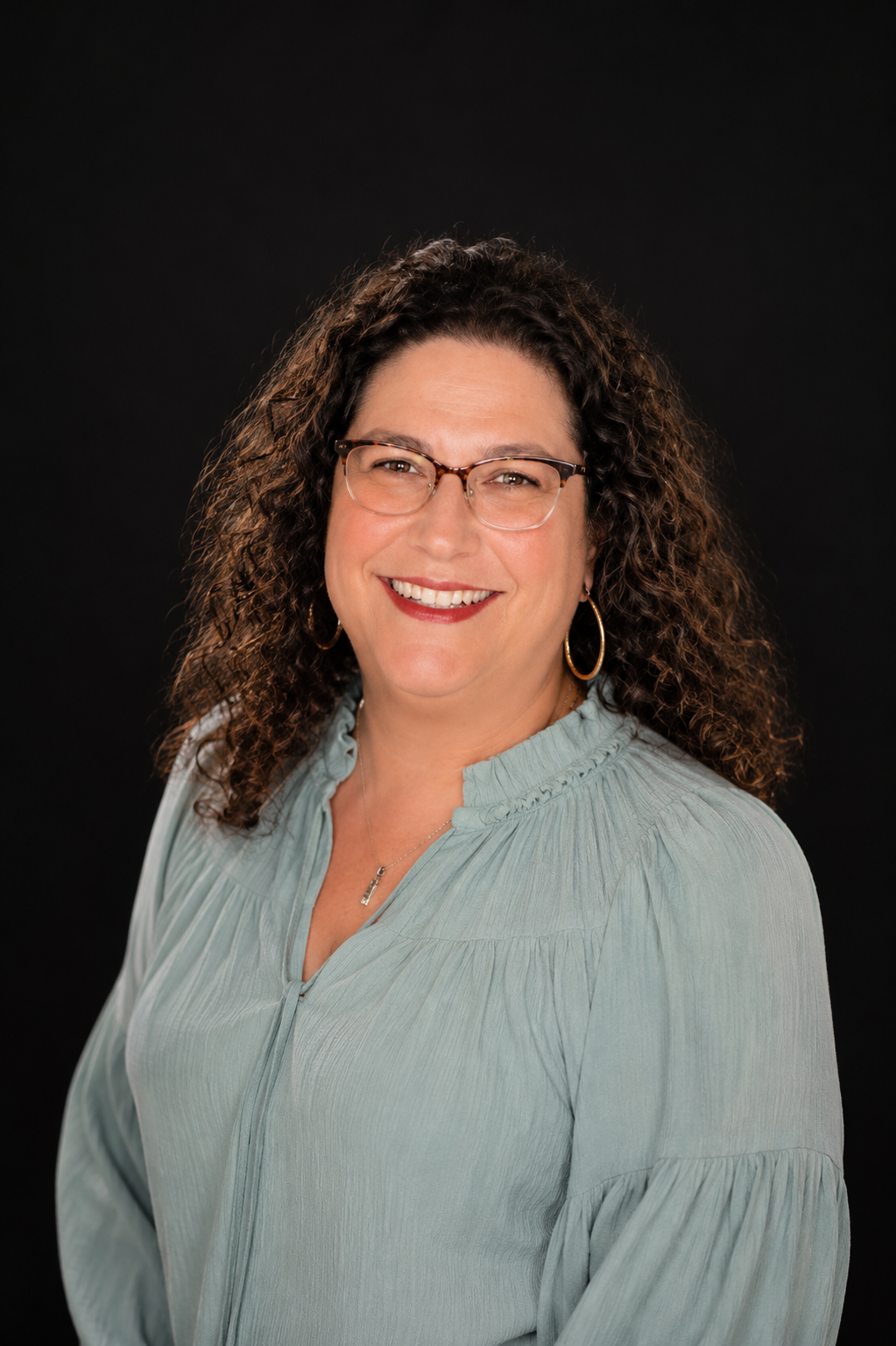
Krista Morris is the founder of Virtuoso Resumes and a two-time TORI Award winner who has helped more than 3,000 professionals land jobs faster with strategic, high-impact resumes. Known for bold storytelling and interview-based information gathering, she blends recruiting insight with clear positioning to turn complex careers into compelling brands.
Before launching Virtuoso, she spent nearly a decade in workforce development with the State of Arizona and Maximus, helping job seekers move from unemployed to unstoppable. Today, her four-writer team serves clients across the United States and supports career transitions at every level.